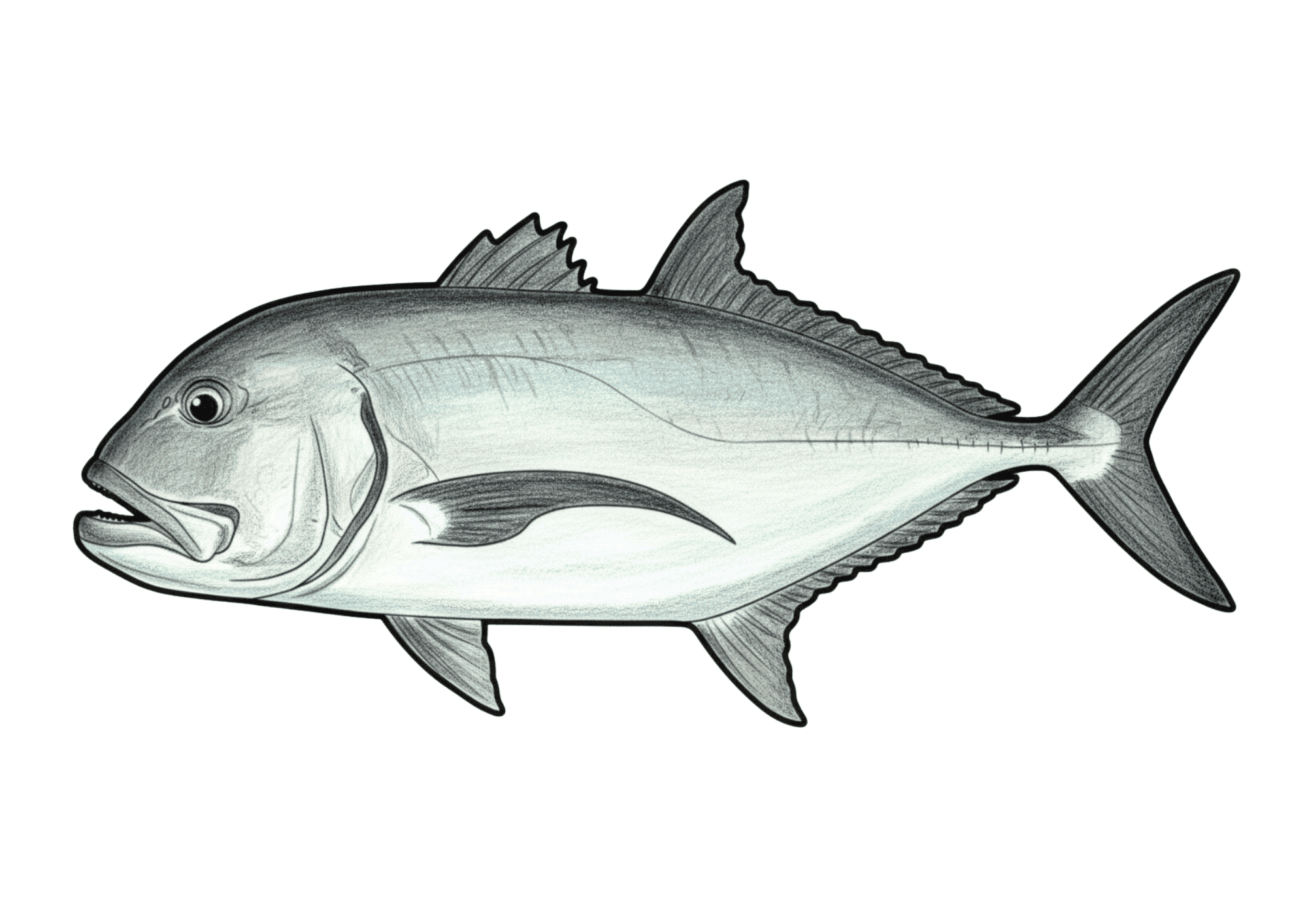
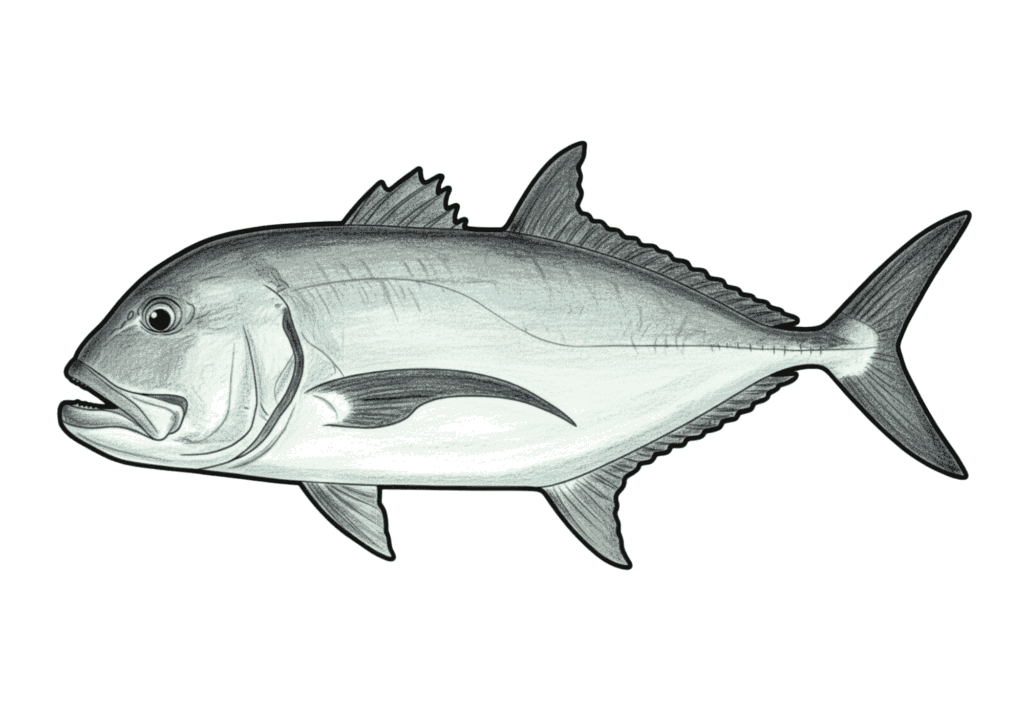
A giant trevally drawn in profile, from the steep forehead and heavy jaw to the row of hard scutes along the base of the tail. The body is left largely open, so it suits colored pencils built up in layers — silver, gunmetal and a hint of blue along the back. Page 1 of the PDF is the plain line art; page 2 is a shaded sample you can follow or ignore. Free to download and print, with no registration.
🎨 Giant Trevally — Shaded Sample
🖊 Giant Trevally — Shaded Sample (plain line art is inside the PDF)
PDF (2 pages: plain line art and a shaded sample) and PNG (shaded sample)
🗣 Conversation Starters — for care activities and family time
Have you ever stood in front of a really large fish tank?
Do you remember taking children or grandchildren to see the fish?
How does it feel when a big fish glides past, close up on the other side of the glass?
If you could go tomorrow, which creature would you most want to see?
What is a giant trevally?
It is a large member of the jack family, found across the tropical Indo-Pacific, and exceptional fish pass a metre in length and reach something like 80 kilograms. Anglers usually just call it the GT. Older individuals darken and the forehead becomes noticeably steep, which is how the artist has drawn this one.
Why is it called rouninaji in Japanese?
Rounin is the word for a masterless samurai — a warrior with no lord, wandering alone. Large giant trevally leave the schools they grew up in and hunt by themselves along the reef edge, and the name is usually explained by that solitary habit. Aji is the general Japanese word for jacks and horse mackerel.
Any tips for coloring it?
A giant trevally is not really one flat color: the back is dark slate, the flanks are polished silver, and the fins carry a faint yellow or blue cast. Leave a broad pale band down the middle of the body and shade inwards from the top and the belly, and the fish reads as metallic rather than grey. The small hard plates along the tail base repay a sharp pencil.