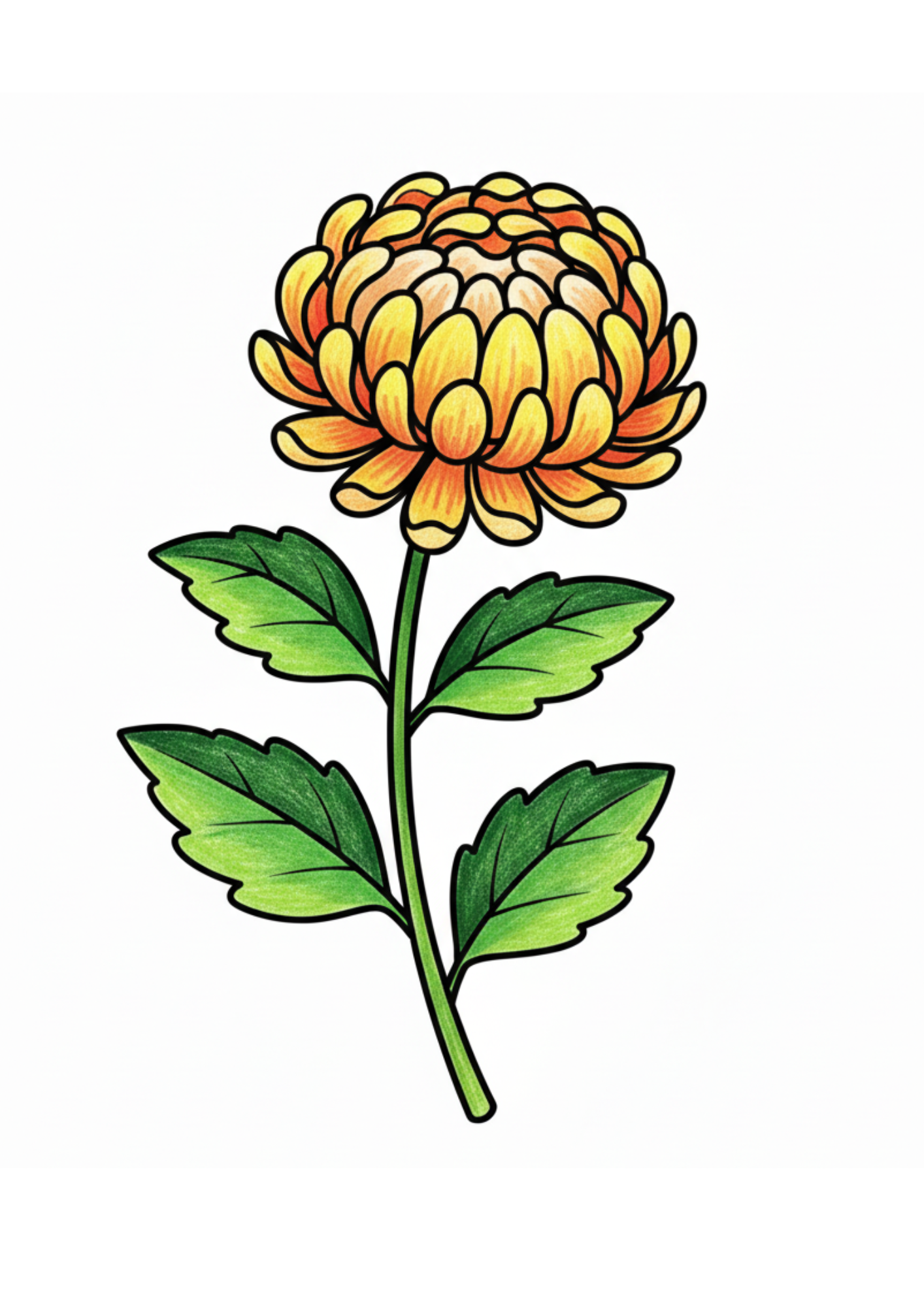
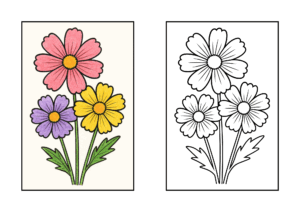
A coloring page of a single chrysanthemum in full bloom. This free printable is made for adults, seniors, and care settings — working through the many layered petals and the notched leaves one at a time gives a beautiful finish. Download the PDF and print it, no registration required.
🗣 Conversation Starters — for care activities and family time
Have you ever grown chrysanthemums? What kinds did you have?
Have you been to a chrysanthemum festival, or to a kiku-ningyo exhibition where the flowers are dressed onto life-size dolls?
Have you ever eaten edible chrysanthemum — varieties such as mottenohoka or kakinomoto?
Have you offered chrysanthemums at a grave or at a family altar?
Is the chrysanthemum one of Japan’s national flowers?
Japan has never designated a national flower by law, but the chrysanthemum is treated as one alongside the cherry blossom, and a stylised chrysanthemum serves as the crest of the imperial family. The plant is generally said to have come from China by the Nara period (8th century) and to have been admired as an ornamental flower at the Heian court. The Choyo festival on September 9 is also known as the Chrysanthemum Festival.
Can chrysanthemums be eaten?
Yes — the petals of certain varieties are edible. Yellow and purple culinary chrysanthemums are well known in Japan — mottenohoka from Yamagata and kakinomoto from Niigata among them — and are blanched and dressed, or served in vinegar. Kikuzake, sake with petals floated on top, is traditionally drunk as a wish for a long life.
What makes chrysanthemums tricky to grow?
Many varieties are short-day plants: they set flower buds as the days grow shorter, so managing light matters. Growers raising large show blooms use lighting at night to shift the flowering time. In Japan, chrysanthemum-growing classes are a popular seasonal activity in care homes.