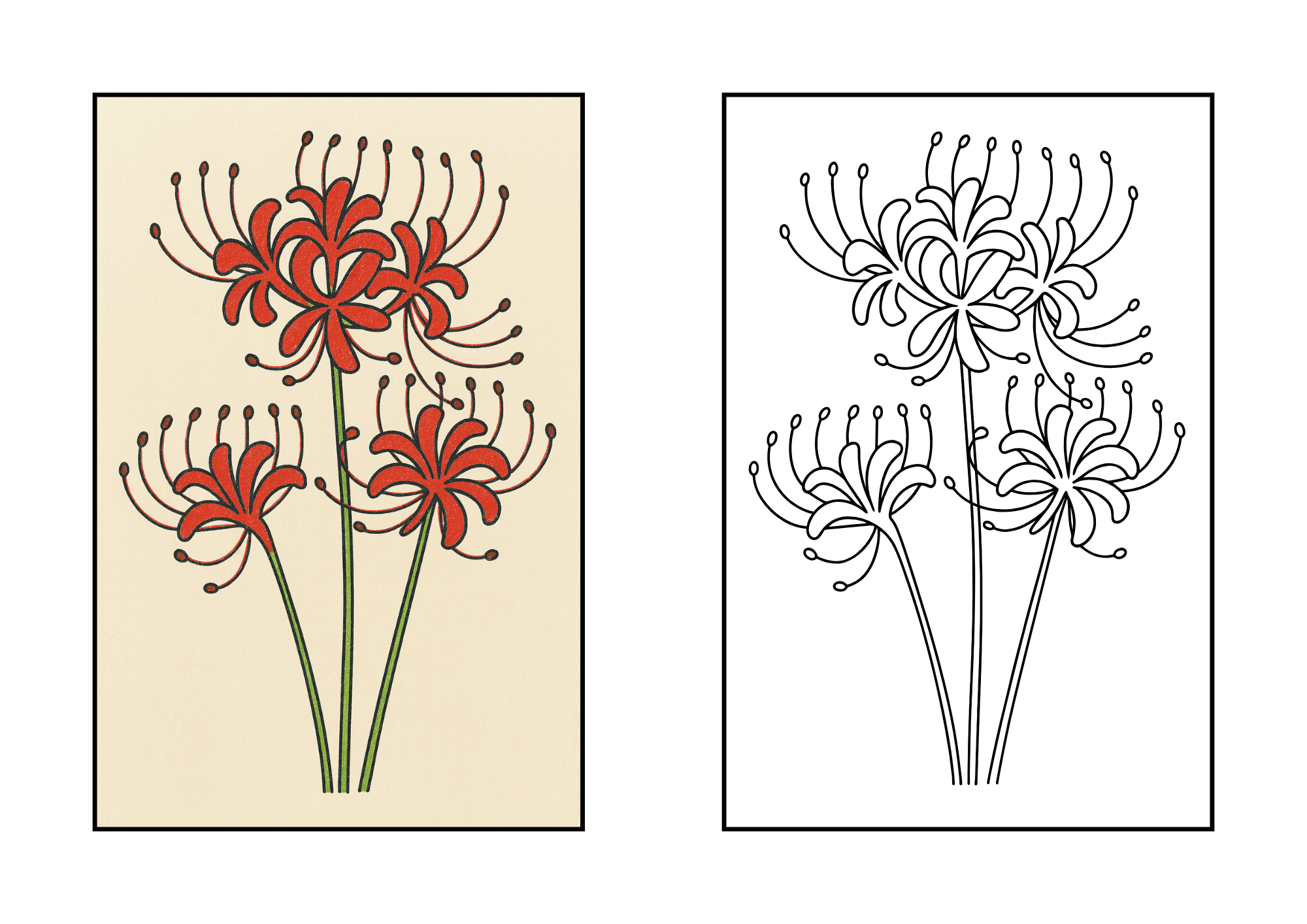
A coloring page of red spider lilies, known in Japan as higanbana. This free printable is made for adults, seniors, and care settings — the narrow, curled petals and the long stamens reward slow, careful coloring. Download the PDF and print it, no registration required.
🗣 Conversation Starters — for care activities and family time
Have you seen red spider lilies in bloom around the autumn equinox?
Is there a view of these flowers along the paths between rice paddies that has stayed with you?
What memories do you have of visiting family graves during equinox week?
Is there a place you especially like to see the red blooms?
Why does the red spider lily bloom right at the equinox?
Shorter days and falling soil temperatures are usually credited for setting the timing, and the flowers open almost to the day of the autumn equinox, around September 20. That is where the Japanese name higanbana — “equinox flower” — comes from. The plant carries many other names as well, among them manjushage and shibitobana, “flower of the dead.”
Are the bulbs poisonous?
Yes. The bulbs contain an alkaloid called lycorine and are toxic. They are said to have been planted along the banks of fields and paddies to keep moles, mice, and insects away. In times of famine people are also said to have leached the bulbs in water to draw out the poison and eat them — not something to try today.
Why are there no leaves on the plant?
The flowers and the leaves never meet. Only the flower stalks come up in autumn; once the blooms fade, the leaves appear and photosynthesise through winter and spring, then die back in early summer. In Japanese the habit is described as ha-mizu hana-mizu: the leaves never see the flowers, and the flowers never see the leaves.