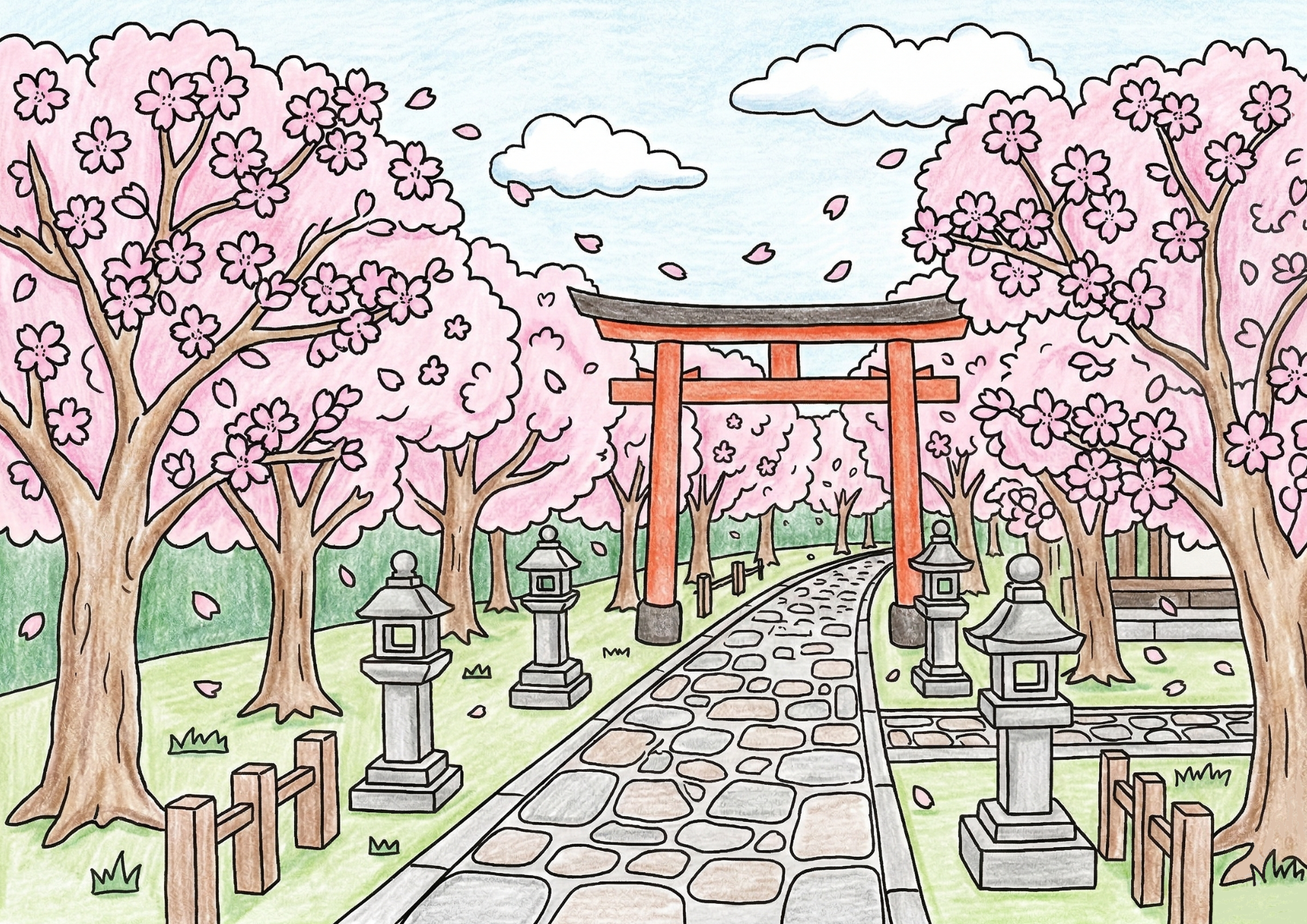
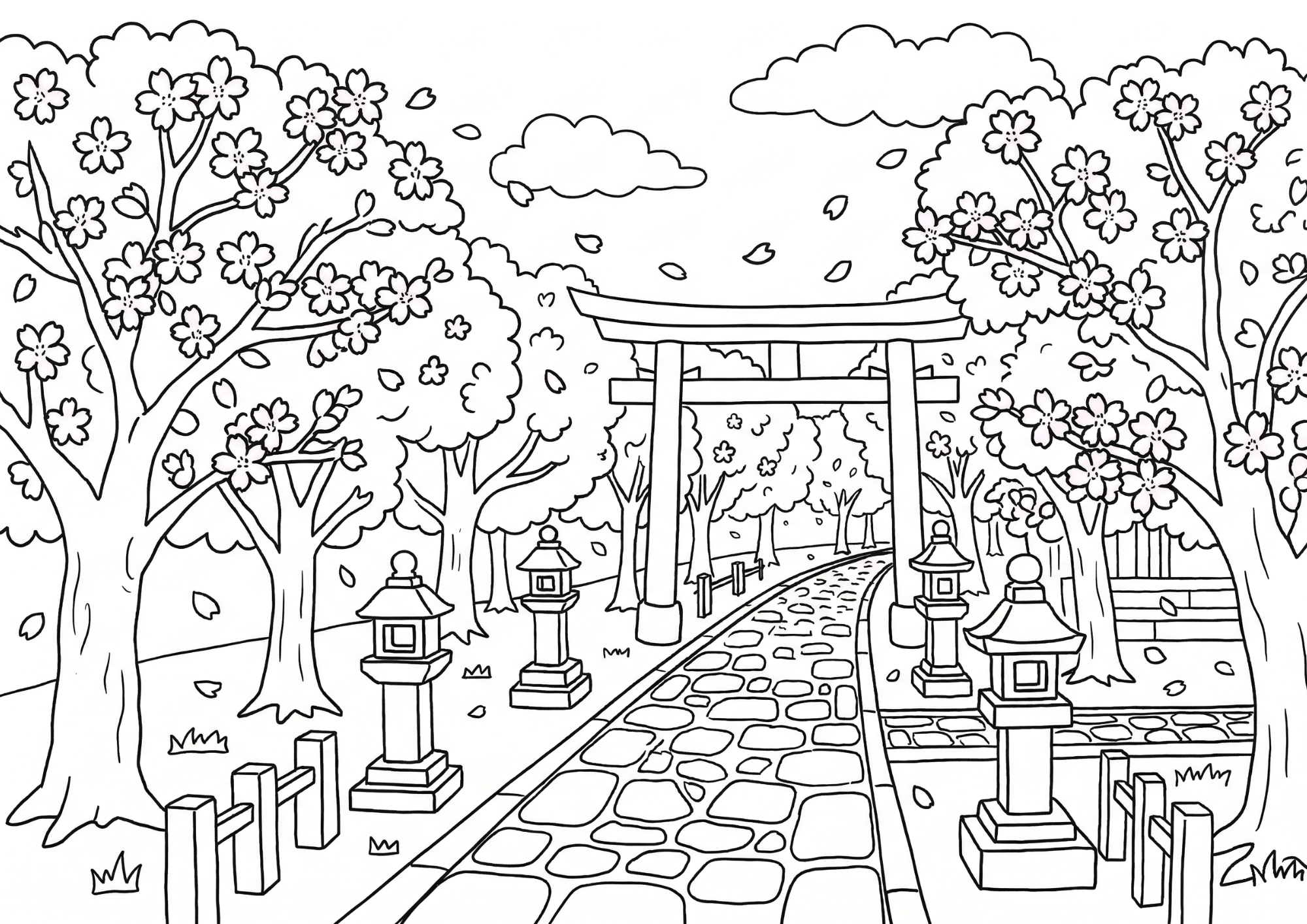
A Japanese-style landscape coloring page of a shrine approach where the cherry trees are in full bloom. With its vermilion torii gate, stone lanterns, and cobblestone path, it captures the feel of spring in Japan. The fine line work is satisfying to fill in, making it ideal for coloring recreation with adults and seniors.
Landscapes, Buildings, Flowers (Cherry Blossom), Spring
File format
PDF (line art + color sample) and PNG
🗣 Conversation Starters — for care activities and family time
“Was there a favorite shrine in your neighborhood?”
“What color will you make the torii gate? Vermilion is the classic choice.”
“Which shrine did you usually visit for the New Year?”
“A scene with stone lanterns is so calming, isn’t it?”
Why are torii gates red (vermilion)?
The vermilion of a torii gate is said to ward off evil. The pigment, cinnabar (mercury sulfide), also acts as a preservative, giving it the practical role of making the timber last longer. That said, not every torii is red — some are made of stone or plain, unpainted wood.
Why is the shrine approach paved with stone?
The cobblestone path serves the practical purpose of preventing mud, and also symbolically marks the ‘way’ into a sacred space. The center is called the seichu and is regarded as the path of the gods, so the polite custom is to walk along the sides.
What do stone lanterns signify?
Stone lanterns first came to Japan along with Buddhism and were set up as offerings of light to the gods and buddhas. They serve both a practical role — lighting dark paths at night — and a decorative one, lending atmosphere to a sacred space.